
4D3N Guide: Best Things to Do in Chongqing
14 September 2026
You may know Chongqing for its fiery cuisine and spicy hotpot, but a visit will leave more than just your tastebuds tingling. The vibrant city is also known as China’s Mountain City, providing thrills and excitement at every turn.
While the usual metropolitan sights are on offer – gleaming skyscrapers, massive shopping malls, skylines that light up the night – it’s the walkability of the city that’ll draw you in. Due to the region’s steep terrain, districts spread across several levels with the heartbeat of everyday living beating underneath densely populated streets and winding trails. Here, trains seemingly disappear into apartment buildings. What seems like a ground-level plaza turns out to be the roof of a building, 18-storey tall. Heritage sights wait at the end of non-descript stairways.
Ready to explore the multi-layered charms of Chongqing? Here’s our 4D3N itinerary to help you plan your trip, as well as tips on how to pay safely and securely during your visit.
When is the best time to visit Chongqing?

The best times to visit Chongqing are during spring and autumn, as Chongqing is a city best enjoyed on foot. Visiting during spring (March to May) or autumn (October and November) will help ensure milder weather and more comfortable temperatures – ideal for wandering hillside streets and open-air walkways. You’ll also avoid the rainy season, which typically stretches from May to September.
During spring and autumn, the mercury can drop quite noticeably as sundown approaches, so bringing a light jacket, a scarf or wearing comfortable layers is recommended. Be sure to wear your most comfortable pair of shoes, on account of all that walking you’ll be doing.
Other useful items include a foldable umbrella, and a refillable water bottle to help you stay hydrated.
Another popular time to visit Chongqing is during the Spring Festival (Lunar New Year). This season sees the city enshrouded by rolling fog and chilly wintry temperatures, giving everything a mysterious quality. However, this is also when the city becomes its most crowded, with holidaymakers and locals thronging the streets in celebration.
Other peak seasons to avoid include the Labour Day (early May) and National Day (early October) holiday periods.
4D3N Chongqing itinerary: What to see, do and eat?

Day 1: Iconic Chongqing and night views
Ease into the city with Jiefangbei, then spend the evening around Hongya Cave and the Jialing River. Keeping your first day within the central area gives you some flexibility if your flight or hotel check-in takes longer than expected.
Start at Jiefangbei
Jiefangbei is Chongqing’s bustling downtown shopping district, where the historic Liberation Monument stands amid gleaming towers, department stores and lively pedestrian streets. It’s a handy starting point for browsing the shops and sampling local food before exploring the riverfront.
Begin around the Liberation Monument, where you’ll find pedestrian streets, shopping centres and places to eat. Keep your first meal simple if you are saving room for hotpot. A bowl of Chongqing xiaomian, the city’s much-loved noodles, is a good starting point. Ask about the spice level before ordering – especially if you’re uninitiated to Chongqing standards!
See Hongya Cave after dark
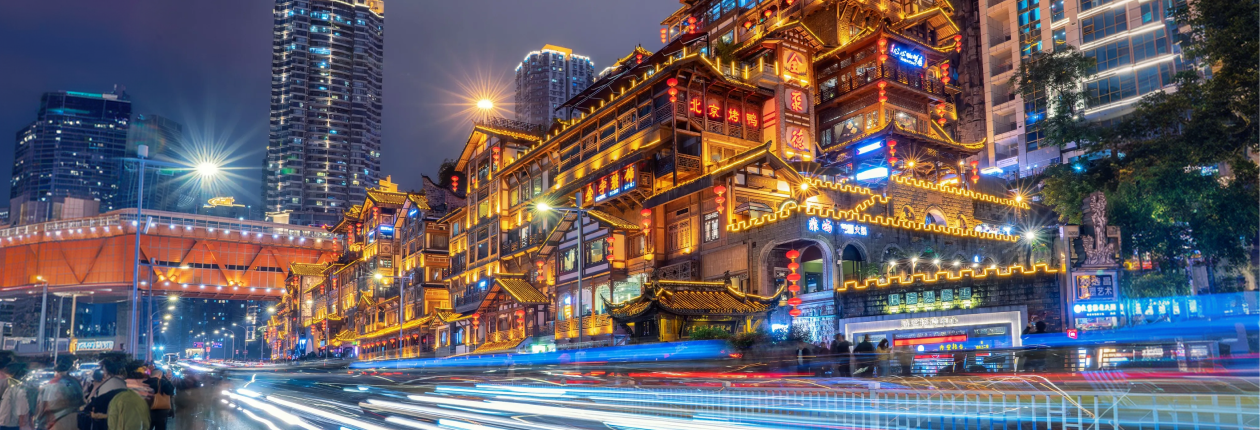
Despite its name, Hongya Cave, or Hongyadong, is best known for its multilevel complex of traditional-style stilted buildings. Built against the hillside beside the Jialing River, it becomes especially striking when illuminated after dark.
Explore the complex if you enjoy browsing, but leave time to view it from outside. From the riverside, the stacked buildings are easier to appreciate as a whole. Nearby Qiansimen Bridge offers another perspective on the riverfront. With pedestrian connections around Hongya Cave being upgraded, follow the designated routes and any on-site diversion or crowd-control signs.
Arrive before dusk to get your bearings, then stay for the illuminated riverfront. The official lighting hours are 6.30pm to 11pm; check the latest schedule before visiting, as timings can change. Leave some flexibility around dinner, as busy walkways can slow you down.
Finish with Chongqing hotpot
Make dinner an occasion: order a bubbling pot of broth and cook your choice of meat, tofu, mushrooms and vegetables at the table. The combination of chilli heat and numbing Sichuan peppercorns is part of the appeal, as any spice lover will tell you.
If your group has mixed spice preferences, order up a split pot with spicy and non-spicy broths. Go slow and order as you go – hotpot is best when savoured slowly with the people you love.
Day 2: Get “lost” in Chongqing’s 8D city
Get ready to explore why Chongqing is nicknamed an “8D city”. Roads, rail lines, buildings and pedestrian routes occupy different heights, which means what looks close on a map may actually sit several levels above or below you.
Start at Liziba, then return towards central Yuzhong for Kuixing Tower and Mountain City Alley. Use the metro or a car between these areas if you need a break from walking and climbing up stairs.
Ride through Liziba Station
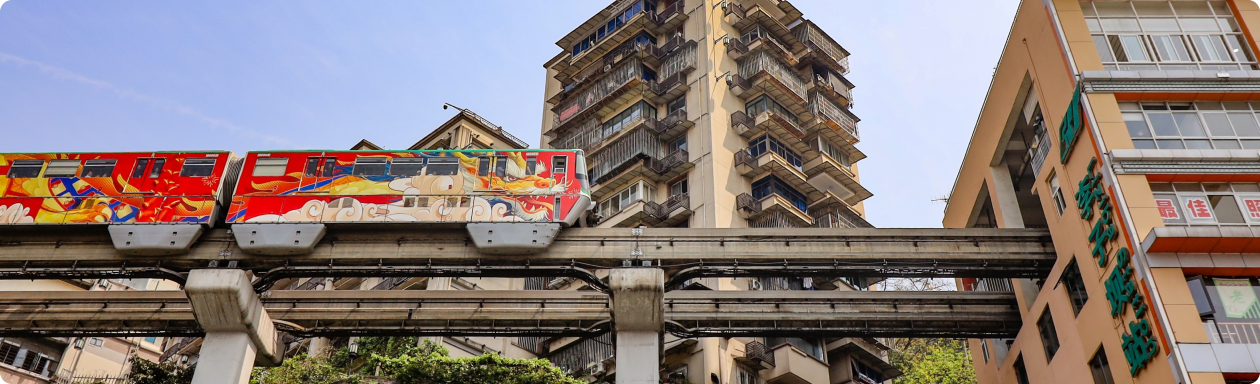
Take Metro Line 2 to Liziba Station, famous for the dramatic sight of trains passing through a residential building. Riding the train lets you experience the journey from inside; once done, head to the designated viewing area to capture the spectacle.
The appeal is partly how ordinary it all is. While visitors wait for the perfect photograph, commuters are simply making their way through the city. Take your pictures from the viewing area and keep station exits clear.
Note: Liziba Station is undergoing phased renovation, with completion scheduled for 30 December 2026. Some station areas and access routes may be restricted, so allow extra time and follow the latest station signs and staff guidance.
Change your perspective at Kuixing Tower
Continue to Kuixing Tower, also known as Kuixinglou, near Linjiangmen. Here, a square that feels like ground level connects with the upper floors of neighbouring buildings, revealing a dizzying change of terrain.
To catch your bearings, take a look at the roads and buildings below. Then turn back towards the street you arrived from. This will help you make sense of the elevation difference, as well as understand why in Chongqing, “ground floor” depends on where you are standing.
Walk Mountain City Alley
Spend the afternoon in Mountain City Alley, or Shancheng Xiang, a revitalised historic hillside district where stairways, old buildings and newer shops and cultural spaces share the slopes. Its pedestrian paths offer a more intimate view of Chongqing after the towers and rail infrastructure of the earlier spots.
Resist the temptation to rush from one photo spot to another. Instead, pause at a viewing point, or stop for a drink. As you sip, observe how stairways connect different levels and how buildings fit into the slope. This is where the city’s unusual geography starts to feel like a way of life.
Choose a shorter section if your legs are tiring. For travellers with limited mobility, these hillside walks may not be accessible all the way through so check for step-free access or road-level drop-offs where possible.
Day 3: Culture, tea and local life
Spend the morning in Ciqikou Ancient Town, then explore the Shapingba area. This keeps the day focused on heritage streets, local food and everyday shopping.
Explore Ciqikou Ancient Town
Take Metro Line 1 to Ciqikou Station and continue on foot to the ancient town, following current station signs for the exit route. Once associated with river trade and porcelain, Ciqikou is now a popular visitor district with stone-paved lanes, traditional architecture, snack shops and teahouses.
Go in the morning and explore beyond the busiest shopping stretch. It is a lively tourist attraction, so expect souvenir stalls and other visitors alongside the historic setting.
For a snack, try mahua, crisp fried dough twists closely associated with Ciqikou. Buy a small portion to sample before choosing any packaged versions to bring home. With flavours ranging from sweet to spicy, they make an enjoyable change from another sit-down meal.
Slow down over tea
Make a teahouse stop part of the visit rather than squeezing it into the gap before your next attraction. Order a pot or covered cup of tea, settle into a seat and enjoy a slower hour after two days of sightseeing.
Some Ciqikou teahouses offer Sichuan opera experiences. If that interests you, ask about the day’s programme, ticket price and whether tea is included before taking a seat. Depending on what time you arrive, shows may not be available.
Spend the afternoon around Sanxia Square
If you feel like doing more shopping after your morning in Ciqikou, head towards Sanxia Square in Shapingba. This established commercial district offers a change from the heritage lanes, with shopping streets and retail centres to browse.
Stop for coffee and choose dinner according to your appetite. After hotpot and street snacks, a straightforward noodle meal may be just what you want. We recommend leaving the evening flexible so you can linger over a meal, catch up on missed sights, or return to your hotel early.
Day 4: A slow morning before flying home
If your flight is early, have breakfast at your hotel or zip out to a nearby local spot. This will leave sufficient time for packing up and checking out.
For a later departure, and if you are staying in central Yuzhong, explore Shibati, also called the Eighteen Steps, near Jiaochangkou. This redeveloped historic district follows the stairway connections between the upper and lower city, providing a charming final opportunity to enjoy and photograph Chongqing’s layered streets.
Take a short stroll, pause for coffee and browse for a small keepsake. Have lunch at a local eatery before heading for the airport.
How to get around and pay in Chongqing?
Plan around height as well as distance
Don’t let the map fool you. What seems like a short route can involve stairs, an elevated walkway or a different building entrance. Check the actual walking directions and station exit before leaving, and give yourself extra time for unfamiliar routes.
For DiDi pickups, choose an identifiable entrance on a road where vehicles can stop. A pin placed beside your destination may still lead the driver to a different level.
Set up Alipay or WeChat Pay before departure
Planning where to eat and what to see in Chongqing is one thing. Figuring out how to pay for everything is another.
Unlike Singapore, where tapping a physical credit card or paying via Apple or Google Pay is second nature, everyday payments in China are heavily centred around mobile wallets such as Alipay and WeChat Pay.
From ordering a bowl of Chongqing noodles to paying for a taxi ride or shopping at local markets, you'll frequently encounter merchants displaying QR codes for payment.
Overseas visitors can link Mari Credit Card to Alipay or WeChat Pay for eligible merchant payments.
Why your choice of credit card matters
When you spend in Chinese Yuan (CNY), your final cost in Singapore dollars can depend on the exchange rate applied, foreign-currency transaction charges and any additional fees imposed by the payment platform.
These costs may seem small on individual purchases, but they can add up across several days of dining, shopping and sightseeing.
That's why it's worth comparing the foreign exchange rates, fees and rewards offered by your card before travelling.
Why use Mari Credit Card for your Chongqing trip?

Whether you're paying for hotpot through Alipay, Mari Credit Card offers several benefits worth considering for your overseas spending
1. No foreign exchange transaction fee1
Mari Credit Card does not impose the specified foreign-currency transaction fee on eligible transactions, helping you avoid an additional card charge when spending in RMB.
2. The Bestforeign exchange rates2
Mari Credit Card offers the best foreign exchange rates for eligible currencies and transactions, subject to the applicable terms and conditions.
This makes the exchange rate an important consideration alongside transaction fees when comparing payment options for your trip.
3. Earn cashback on eligible overseas spending
Enjoy 1.5% cashback3 on eligible foreign-currency transactions, subject to the applicable monthly spending limit and promotion conditions.
You can also check whether any additional overseas cashback promotions are available when planning your trip.
From now till 31 December 2026, MariBank is running a promotion of up to 3% Overseas Cashback4 for new users, plus a chance for every Mari Credit Cardholder to win up to 50 pairs of return flight tickets anywhere! Every eligible S$5 spent = 1 chance5. No extra fees, just seamless payments and unlimited cashback as you chase stunning autumn views all over Japan.
4. More ways to pay
Link your Mari Credit Card to Alipay or WeChat Pay for supported merchant payments, or use your physical card directly in-store.Having both options gives you greater flexibility when travelling.
Get your payments ready before you fly
Chongqing has plenty to offer, from its fiery hotpot to its unusual hillside streets and illuminated riverfront.
Before setting off, make sure you've planned not just where to go, but also how you'll pay along the way.
With Mari Credit Card, you can prepare for eligible mobile wallet payments, avoid the specified foreign exchange transaction fee and earn cashback on qualifying overseas purchases.
Disclaimer
1From 1 Jan 2026, all foreign currency transactions (including overseas and online transactions) which are posted to your Mari Credit Card account will not be subject to the prevailing charge and fee in the Mari Credit Card: Interest, Fees and Charges table, which can be found here.
2For the FX Rates with Mari Credit Card Promotion Terms & Conditions which apply, please see here. Valid till 31 Dec 2027.
3The 1.5% Cashback is only applicable for Eligible Overseas Spend in foreign currencies (non-Singapore Dollars) up to a maximum amount of S$1,500 of Eligible Overseas Spends in a Relevant Month. For more information, please refer to the Spend Overseas with Mari Credit Card: Promotion Terms & Conditions (valid till 31 Dec 2027) which apply.
4The Bonus 1.5% Overseas Cashback is only applicable for Eligible Overseas Spend in foreign currencies (non-Singapore Dollars) up to a maximum reward of S$22.50 each Relevant Month. For more information, please refer to the Spend Overseas and Earn Extra Cashback with Mari Credit Card Promotion Terms and Conditions.
5An Eligible Customer will receive one (1) Chance for each Eligible Spend posted during a calendar month. For full eligibility criteria and complete terms and conditions, definitions of Eligible Customer and Eligible Spend, please refer to the Win S$100k worth of Flight Tickets Promotion Terms and Conditions.