
Japan Autumn 2026: Foliage Forecast & Best Viewing Spots
7 September 2026
Japan's autumn holidays are all about crisp, cool weather, seasonal delicacies and landscapes transformed by dramatic washes of scarlet and gold – thanks to the country’s lush red maples and golden ginkgo trees. Known locally as koyo, the changing leaves appear first in the mountains of northern Japan before gradually moving south to Tokyo, Kyoto, Osaka and Kyushu.
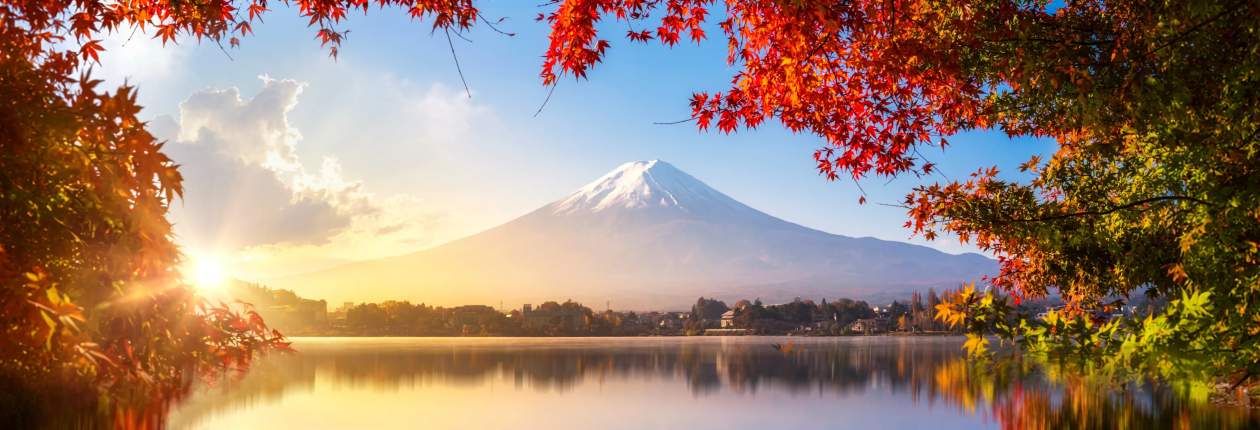
Japan’s autumn foliage is a natural spectacle made to be savoured. The colours appear first in cooler northern and high-altitude areas before gradually moving south, creating a viewing season that typically runs from late September to early December. Depending on when you travel, you could soak in an onsen surrounded by autumn colours in Hokkaido, photograph Mt Fuji framed by fiery maple leaves, or explore Kyoto’s temples at their most atmospheric.
The key is choosing the right location for your travel dates. This guide covers the latest Japan autumn foliage forecast for 2026, recommended viewing spots, and practical tips for planning your trip from Singapore—including how to skip FX fees and earn up to 3% cashback on your trip using the Mari Credit Card.
When is the best time to visit Japan for autumn foliage in 2026?
Generally speaking, the best time to visit Japan for autumn views is October to early December, although weather patterns, elevation and other local factors can produce variations.
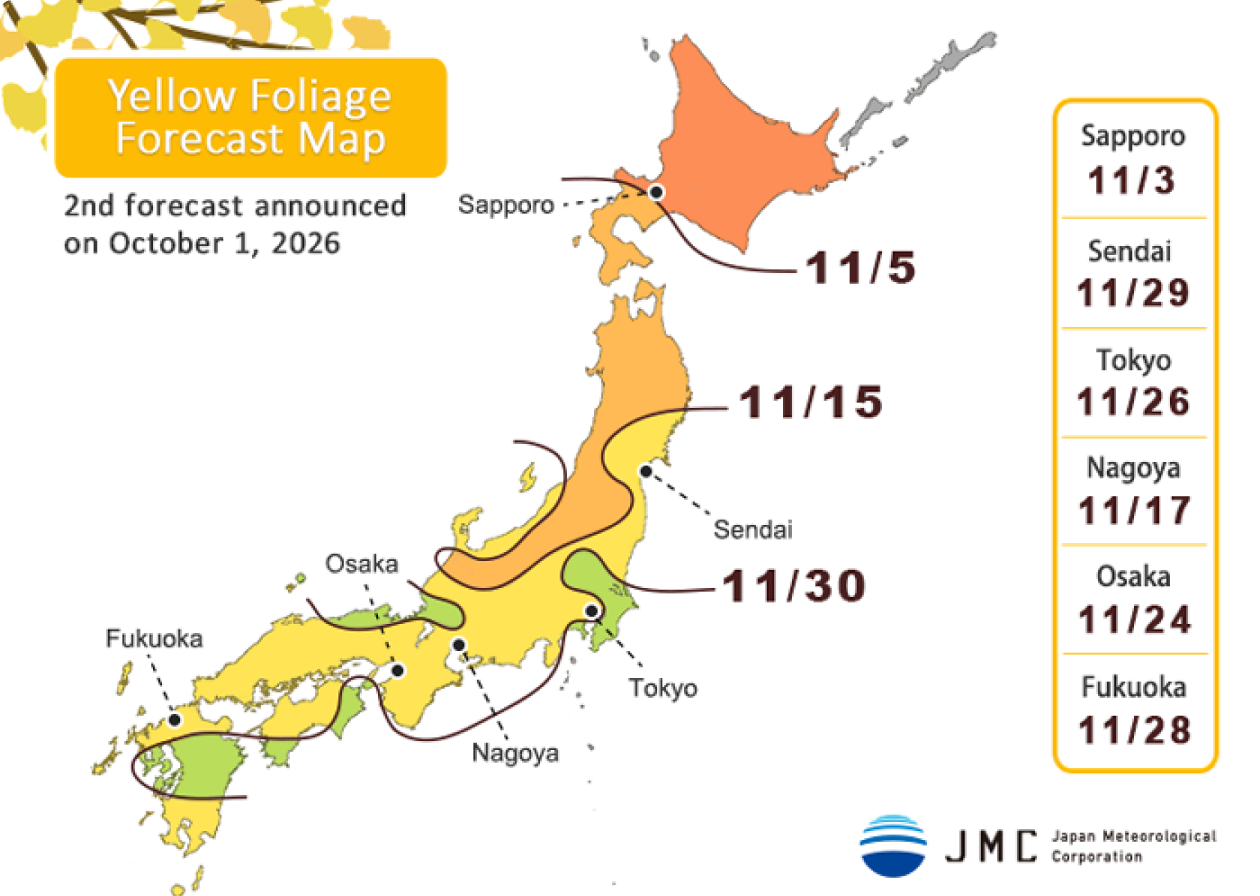
Still, here are the typical visiting date ranges by location:
- Late-September to mid-October: Hokkaido’s mountain areas
- Mid-October to early November: Sapporo, Tohoku and higher elevations
- Early to mid-November: Fuji Five Lakes and mountain destinations in central Japan
- Late November to early December: Tokyo, Kyoto, Osaka and much of western Japan
- Late November to mid-December: Lower-elevation areas in Kyushu
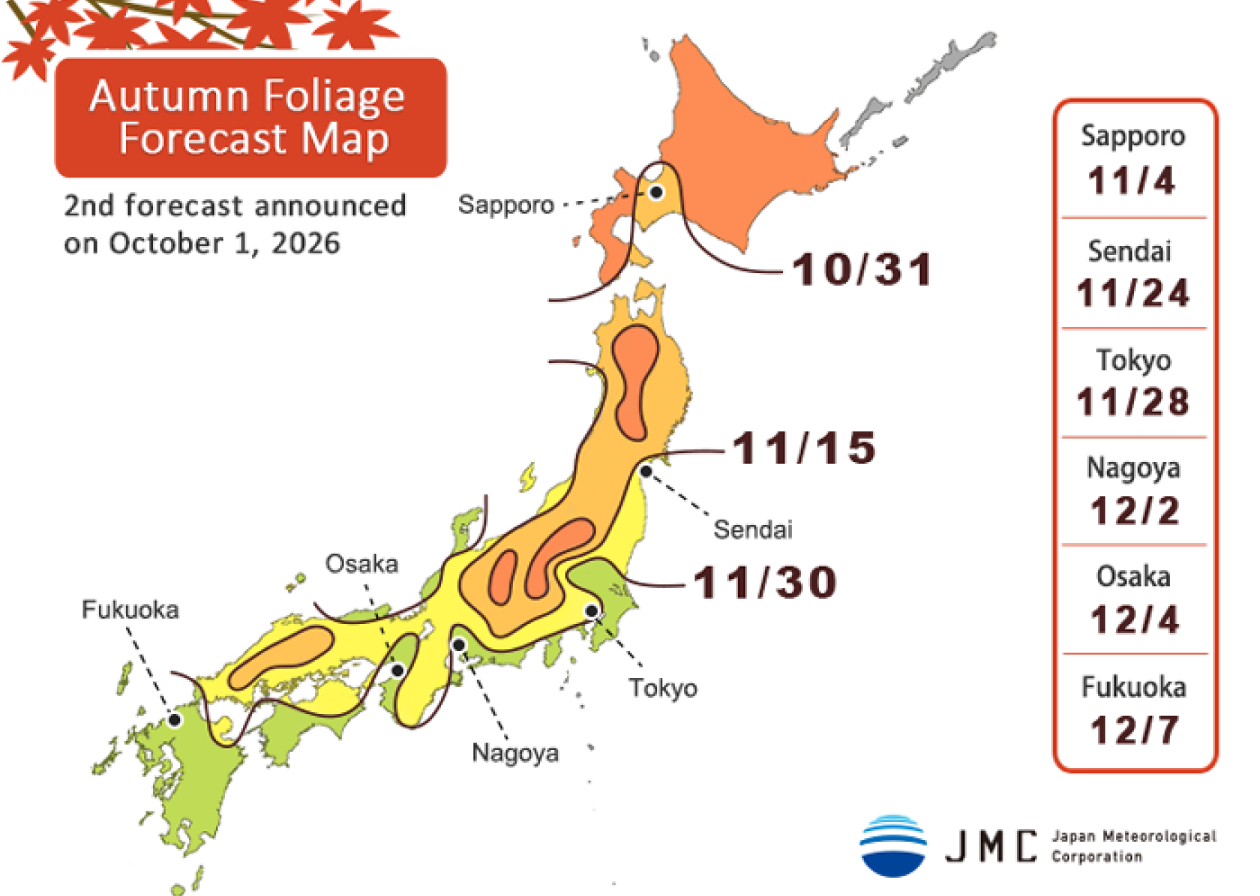
Source: Japan Meteorological Corporation, Release of 2026 Autumn Foliage Forecast (2nd forecast)
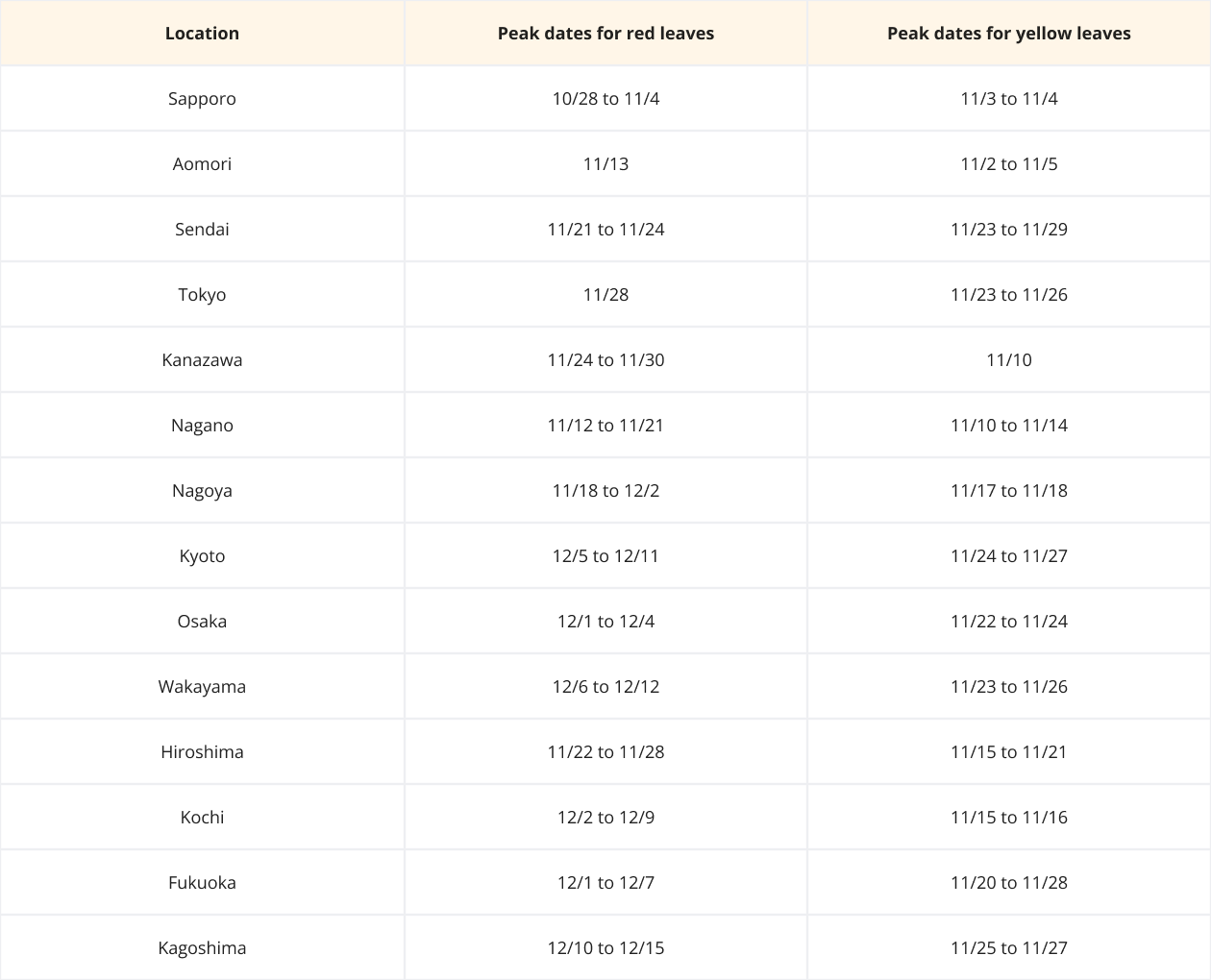
Source: Japan Meteorological Corporation, Release of 2026 Autumn Foliage Forecast (2nd forecast)
The dates in the table above are meant simply as a forecast. Peak dates may change as the season progresses. Be sure to check official channels for the latest forecasts as you book your flights.
Best places to enjoy autumn foliage in Japan
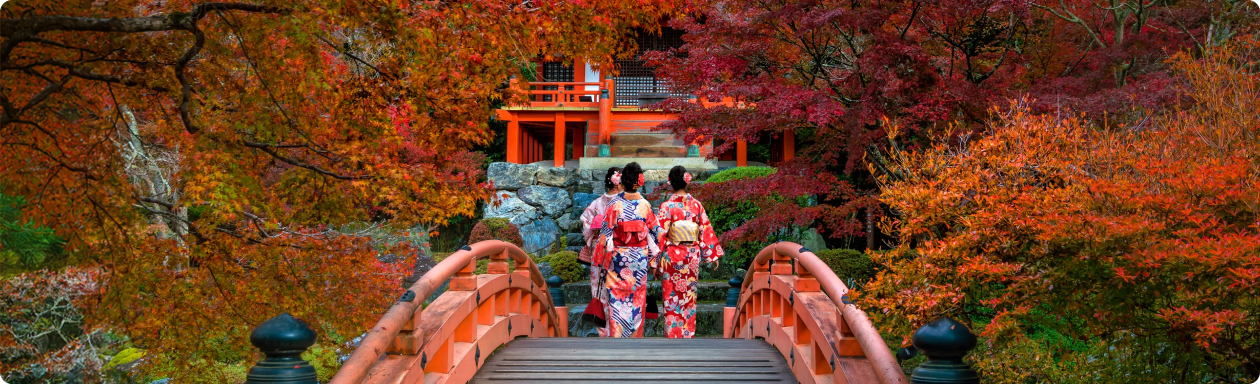
From city gardens and parks to historic temple grounds and majestic mountain trails, to even a university or two, there is no lack of places to enjoy the fiery autumn colours throughout Japan. Here are some of our favourites!
Where to see autumn foliage in Sapporo and Hokkaido?
Hokkaido University
Hokkaido University’s Ginkgo Avenue runs through the Sapporo campus near Kita 13-jo Street. In autumn, its rows of ginkgo trees turn golden, creating one of the city’s best-known seasonal views. The avenue is around a five-minute walk from Kita-juni-jo Station, making it easy to include in a day of sightseeing around central Sapporo. Visitors are welcome on campus, although they should follow university access rules.
Nakajima Park
Nakajima Park is a 24-hectare urban park with more than 5,000 trees, including ginkgo, cherry and pine. Its pond, streams and historic Hoheikan building create a scenic setting for an autumn walk. For fantastic yellow views, head to the ginkgo avenue, which begins near Nakajima-koen Station. This park is particularly convenient for autumn colours viewing if you are staying around central Sapporo or Susukino.
Jozankei
Jozankei is a hot-spring area surrounded by forested valleys, around a one-hour drive from Sapporo Station. Its autumn colours usually arrive before those in central Sapporo, with official guides placing the usual viewing period from mid- to late-October. Bridges and walking paths around the Toyohira River provide views of the foliage, while nearby Hoheikyo Dam is another popular seasonal destination.
Where can you see autumn leaves in Tokyo and around Mt Fuji?
Rikugien Gardens
Rikugien Gardens is one of Tokyo’s best-known places for viewing maple leaves. Walking paths circle a central pond, with bridges and teahouses adding to the traditional garden scenery. Autumn illumination events are regularly held, adding to the popularity and the thronging crowds. Be sure to check admission dates and activities on the garden’s official website before visiting.
Meiji Jingu Gaien Icho Namiki
Icho Namiki Avenue is lined with rows of ginkgo trees that turn bright yellow in late November and December. The avenue connects Aoyama with Meiji Jingu Gaien and is a popular photography spot when the leaves form a golden canopy overhead. Aoyama-itchome Station is the nearest station, with Exit 1 closest to the avenue.
Lake Kawaguchi Momiji Corridor
The Momiji Corridor runs for approximately 150 metres along both banks of the Nashi River near Lake Kawaguchi. Around 60 mature maple trees line the corridor, while the wider lakeside area has approximately 400–500 autumn-coloured trees. The maple tree corridor usually reaches its most colourful period from early to mid-November. This location is also beloved for viewing Mt Fuji, although views are dependent on the weather.
Where can you see autumn foliage in Kyoto and Osaka?
Eikan-do Temple
Eikan-do, also known as Zenrin-ji, is one of Kyoto’s best-known autumn temples. Around 3,000 maple trees colour its pond garden, temple buildings and pagoda. The temple can become extremely crowded during the peak period, so allow extra time and consider visiting on a weekday.
For 2026, the temple’s official autumn evening illumination is scheduled to run from 20 November to 6 December.
Arashiyama
Arashiyama offers views of autumn-coloured hills beyond Togetsu-kyo Bridge, along with temples, riverside scenery and walking routes through Saga and Okusaga. The bridge and bamboo grove attract large crowds during the foliage season. To avoid crowds, try taking the quieter route through Kameyama Park towards the Bamboo Grove.
Minoo Park
Minoo Park is a convenient nature excursion from Osaka. The train journey from Osaka-umeda to Minoo Station takes about 25 minutes, followed by a gently inclined walk of approximately 45 minutes to Minoo Waterfall. The trek is well worth the stunning sight that awaits: The waterfall has a drop of 33 metres and is surrounded by forest that usually turns red and gold in late November.
Where can you see autumn foliage in Fukuoka and Kyushu?
Akizuki Castle Ruins
Akizuki Castle Ruins are located in the historic castle town “Little Kyoto in Chikuzen”. Around 20 maple trees grow near the relocated Black Gate, creating a vivid contrast between the red leaves and dark timber. The best viewing period is said to be from late November to early December. The site is always open, but as there is no nighttime illumination, daytime visits are recommended.
Raizan Sennyoji Daihioin Temple
Located in Itoshima, Raizan Sennyoji Daihioin Temple’s main autumn attraction is a 400-year-old maple tree designated as a natural monument of Fukuoka Prefecture. Around 200 other maple trees and a Japanese-style garden add to the display. The temple is approximately a 40-minute drive from Hakata via toll roads. It is busiest in November, so plan on arriving earlier in the mornings.
Kuju Mountains
The Kuju Mountains form part of Aso-Kuju National Park in Oita Prefecture. Official tourism sources identify October and November as the main months for autumn colours, although timing varies considerably with elevation and weather. Hike in the mountains to admire the vibrant foliage up close, or take in the scenery from locations along the Yamanami Highway, including Makinoto Pass and the Tadewara area.
Tips for planning your Japan autumn trip
Autumn foliage colours can change, so stick with a flexible route rather than a fixed one. Check local news for the latest forecasts on autumn colours in your area before heading out. Autumn is one of Japan’s busiest travel seasons, so expect to deal with crowds and changing schedules.
Sort out your travel cards and save on FX fees
Before you fly, make sure you have the right payment methods ready. Credit cards are widely accepted at hotels, department stores and many restaurants, but you will still need cash for smaller shops, rural attractions, temple admission counters and market stalls. Keep a backup payment method separate from your main wallet.
For those travelling to Japan this year, opt for a card like the Mari Credit Card, which makes spending in Japan safe, seamless, and rewarding:
- No FX fees1: Shop for snacks, pay for meals, and buy souvenirs without paying an exchange rate fee.
- You get the best rates2 for JPY!
- 1.5% cashback overseas3: Enjoy 1.5% cashback instantly on all eligible foreign currency spends for the first S$1,500 spent.
- Track your expenses: Use the MariBank app to stay on budget during your travels easily.
Bonus Promo: From now till 31 December 2026, MariBank is running a promotion of up to 3% Overseas Cashback4 for new users, plus a chance for every Mari Credit Cardholder to win up to 50 pairs of return flight tickets anywhere! Every eligible S$5 spent = 1 chance5. No extra fees, just seamless payments and unlimited cashback as you chase stunning autumn views all over Japan.
Book accommodation and transport early
Hotels in Kyoto and around Mt Fuji can fill quickly during peak foliage periods. Reserve popular train services, highway buses and limited-entry attractions as soon as your itinerary is firm. Choose refundable options where practical in case the forecast changes.
Consider elevation
If city trees are still green, a nearby mountain or higher-altitude destination may already have good autumn colour. If the mountain season has ended, lower-elevation parks and gardens may be approaching their peak. This gives you alternatives without rebuilding your entire trip.
Visit popular places early
Arriving shortly after opening can mean lighter crowds to jostle with and better conditions when taking the exact photos you want. For evening illuminations, check whether advance tickets or timed admission are required.
Pack layers and comfortable shoes
Autumn temperatures in Japan can vary significantly between regions and throughout the day. Bring layers that are easy to add or remove, along with a light rain jacket and comfortable walking shoes. Hokkaido may require winter-weight clothing, particularly in late October and November.
Disclaimer
1From 1 Jan 2026, all foreign currency transactions (including overseas and online transactions) which are posted to your Mari Credit Card account will not be subject to the prevailing charge and fee in the Mari Credit Card: Interest, Fees and Charges table, which can be found here.
2For the FX Rates with Mari Credit Card Promotion Terms & Conditions which apply, please see here. Valid till 31 Dec 2027.
3The 1.5% Cashback is only applicable for Eligible Overseas Spend in foreign currencies (non-Singapore Dollars) up to a maximum amount of S$1,500 of Eligible Overseas Spends in a Relevant Month. For more information, please refer to the Spend Overseas with Mari Credit Card: Promotion Terms & Conditions (valid till 31 Dec 2027) which apply.
4The Bonus 1.5% Overseas Cashback is only applicable for Eligible Overseas Spend in foreign currencies (non-Singapore Dollars) up to a maximum reward of S$22.50 each Relevant Month. For more information, please refer to the Spend Overseas and Earn Extra Cashback with Mari Credit Card Promotion Terms and Conditions.
5An Eligible Customer will receive one (1) Chance for each Eligible Spend posted during a calendar month. For full eligibility criteria and complete terms and conditions, definitions of Eligible Customer and Eligible Spend, please refer to the Win S$100k worth of Flight Tickets Promotion Terms and Conditions.