

Wedding Planning Guide: Checklist, Timeline & Costs
3 August 2026
Wedding planning can be stressful. Not only because getting married is one of the most significant events in your life, but hosting a wedding (and all its many preparations) can add up to a significant amount.
This is why one of the most useful things you can do early is to decide on the type and scale of the wedding. Afterall, a simple ceremony and tea reception for just close friends and relatives will be hugely different from a full-day ceremony culminating in a sit-down wedding banquet for 300 guests – both in cost and logistics.
Once you’ve both agreed on how the wedding will go, and how much you’re willing to spend, other decisions will naturally follow from there.
How far ahead of time should you plan ahead? In most cases, 12 months ahead makes for a reasonable wedding plan. Also, having a timeline makes it easier to ensure things are moving along as planned, and where things may be falling behind.
We’ve put together a 12-month wedding planning guide to help you work through each stage without getting overwhelmed. And to help you manage your wedding budget, we’ve also included an estimated budget breakdown, as well as tips on financing your Big Day.
Wedding planning 12-month checklist

One major stress point when it comes to planning a wedding (aside from who sits where) is having to coordinate and manage several different venues and providers – and the various payment schedules involved.
Arranging tasks and vendors according to a timeline will help you keep track of things and stay informed of when payments become due.
Here’s our recommended 12-month checklist. Feel free to adjust this up or down, depending on how big your wedding ceremony will be, or how many friends or relatives you’re roping in to help.
12 months before
This is the stage for decisions that shape almost everything else: your budget, guest list, preferred date and venue.
- Set a working wedding budget. Agree on how much each of you can comfortably contribute, whether your families will be helping and which expenses the budget needs to cover. Keep honeymoon, home renovation and other costs separate to avoid messiness.
- Draft the guest list. You do not need every name confirmed yet, but you should have a realistic estimate. Sticking to an estimated number early will help you avoid bowling up your costs because the final guest list jumped from 80 to 200 people.
- Choose a date. Having some flexibility could give you more venue options and make it easier to compare weekday, lunch and weekend packages.
- Book the venue. Wedding venues enjoy high demand, so it’s crucial to secure your venue early. Shortlist three or four venues, and book your ideal one as soon as you can. Before signing, check what the quoted package includes; service charge, GST, corkage, decorations, AV equipment rental, etc. can all affect the final bill.
6 months before
At this second major milestone, you should finalise key wedding vendors such as caterers, photographers and apparel.
- Book your photographer and videographer. Choosing an aesthetic style is just one consideration. Be sure to compare the on-site hours provided, editing timelines and charges for extras such as a same-day edit.
- Choose the wedding outfits. No, it’s not too early; you’ll need to allow time for fittings and alterations. Check whether a bridal package includes accessories, makeup, pre-wedding photography and outfits for different parts of the day. Renting, instead of buying, will help you save, makes it easy to wear multiple outfits, and avoid storage issues in future. while avoiding
- Confirm catering where necessary. Finalise the menu, service style and estimated headcount, including any dietary needs.
- Prepare the invitations. Decide whether you will use printed cards, digital invitations or both and begin collecting the necessary contact details.
3 months before
Your big day is fast approaching. If things have gone according to plan, you should only have these last few items to lock in.
- Finalise the remaining vendors. This may include the florist, decorator, makeup artist, entertainment, transport and wedding-day coordinator. Don’t forget the marriage solemniser – if you have a respected elder in mind, be sure to check their schedule early.
- Confirm the programme. Map out the ceremony, tea ceremony, photo sessions, reception and banquet timings. Share the schedule with your vendors so that gaps or clashes can be resolved early.
- Follow up on invitations. Start confirming attendance and note any dietary, accessibility or transport requirements.
- Plan the honeymoon. If you are travelling soon after the wedding, check passports, leave arrangements, insurance and booking deadlines.
Final month
This is the final countdown. By now most things should have been confirmed, freeing you to focus on the following items.
- Complete the seating plan and confirm guest numbers after following up on outstanding RSVPs.
- Confirm vendor arrival times and finetune the wedding-day programme.
- Review outstanding payment, including when it is due, who will pay it (and how).
- Attend final fittings and break in any new shoes before the wedding.
- Prepare the rings, marriage documents, red packets and vendor contact list.
- Assign a trusted person to handle questions and payments on the day so you can focus on the celebration.
How much do weddings cost in Singapore – Budget breakdown
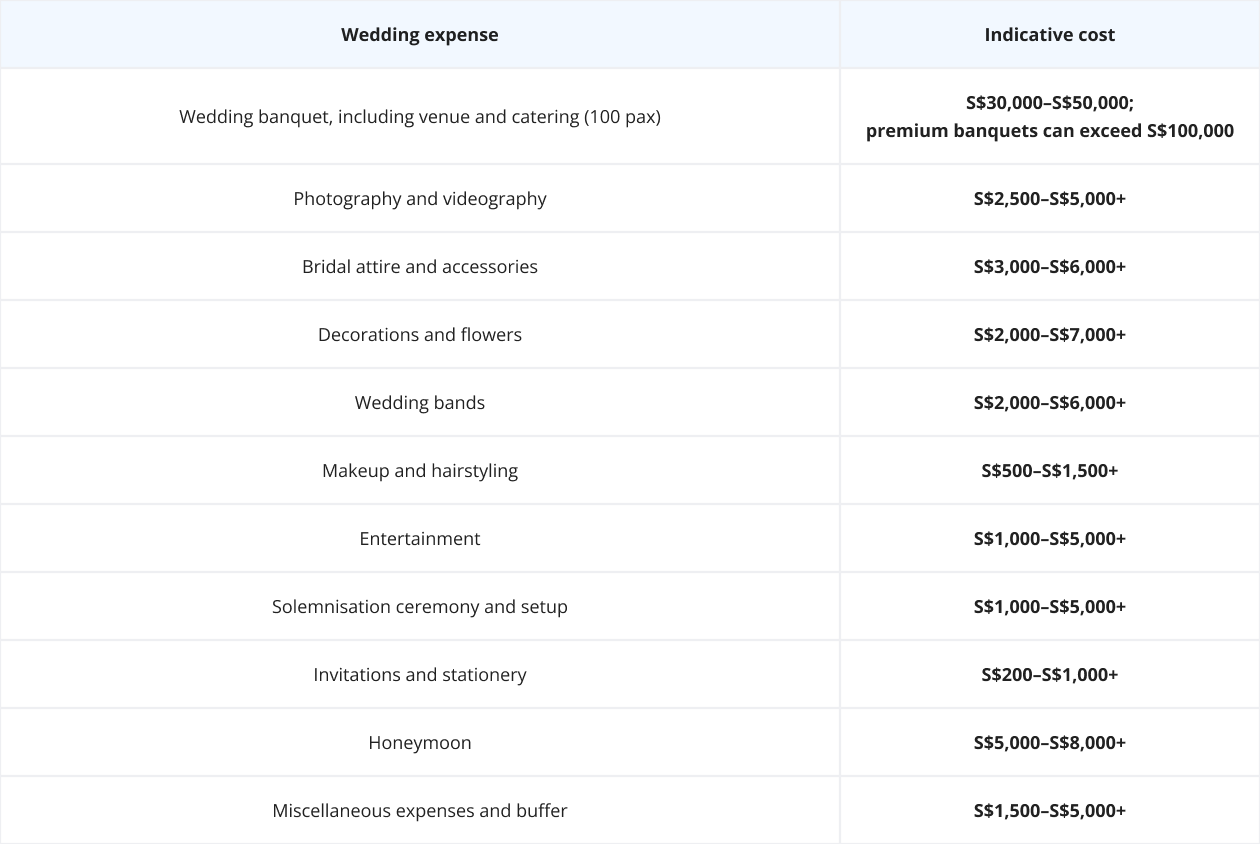
A wedding in Singapore can run from tens of thousands of dollars to approaching or exceeding six figures, although a small solemnisation or restaurant celebration can cost considerably less. The most common determinant will be your guest count, venue and banquet option, although customisations and other items can also quickly add up.
The figures below are broad planning estimates; they have been drawn from various online sources including SingSaver, MoneySmart and Singapore Brides.
Tips for managing wedding expenses

Prioritise key spending areas
Decide two or three things that matter most. Is it the venue? The photography and videography? Or perhaps it’s the food that matters most. This way you can allow more room in your budget for these important elements, and won’t mind skimping on less important stuff such as invitations or door gifts.
Compare vendors early
Compare vendors early, while you still have time to negotiate or adjust your plans. A rushed decision close to the wedding usually leaves you with fewer alternatives. When evaluating packages, ask for itemised quotations. This will help you have a clearer view of what each package comes with – or doesn't.
Choose the right credit cards
Wedding expenses are one of the best chances to rack up credit card rewards, so be sure to have the right credit cards when paying.
Cards that give you uncapped rewards will be your best choice. For instance, air miles cards can help you earn air miles to offset flight tickets for your honeymoon, while unlimited cashback cards give you instant cashback. Use the Mari Credit Card for 1.5% unlimited cashback – saving you hundreds of dollars.
Keep track of payment due dates
Weddings come with several bills, and not all payments are a one-and-done deal. Some services require deposits and final payments, which means keeping track of a whole lot of different payment dates.
It’s worth keeping a payment worksheet to stay on top of all your payments. Prioritise those that are coming due – this is important as missed deposits can mean forfeiting your booking.
Build a buffer in case of budget overruns
No matter how well or tightly you plan your wedding, certain costs may overrun. Instead of stressing out about last-minute cost increases, have a buffer to absorb the cost, leaving you to more fully enjoy your wedding day. Aim for around a 10% buffer.
Financing options for wedding expenses

Personal savings
Personal savings are the best source of wedding finances, in that they do not need to be repaid. You can spend as necessary, but we recommend not exhausting your savings completely just to pay for your wedding. Consider maintaining an emergency fund just in case.
Instalment plans
If you are financing your wedding expenses using credit cards, and don’t quite have enough savings or cash to pay them off in full, consider using a credit card instalment plan instead. This will allow you to split up your wedding expenses over several months (typically 6 to 24 months) giving you more time to pay. Importantly, you can avoid incurring credit card interest charges – provided you meet each instalment payment.
Note that converting your credit card charges to instalment plans will void your credit card rewards. Still, that’s far preferable, compared to paying hefty credit card interest charges.
Personal loan
If you want a fuss-free, straightforward option to finance your wedding, choose a personal loan. This will provide you with the funds you need, while allowing you the choice to pay off your loan over your chosen time period.
Personal loans are also easy to manage, as you need only pay a fixed amount once a month, until the duration of the loan runs out. Interest is also lower, compared to credit cards.
Another benefit is flexibility. You can borrow as much or as little as you wish (subject to provider limits). If, say, you have around half of your wedding budget saved up, you can choose to borrow enough to top up the remaining, or take out a larger loan as a buffer or to cover other expenses.
MariBank Instant Loan - The best fit for your big day

MariBank Instant Loan is the fuss-free, low-cost way to finance your dream wedding. Here’s why:
- Low interest. Fund your wedding expenses from 1.28% p.a. (EIR 1.92% p.a.) – one of the lowest in town!
- Generous quota. Borrow up to 4x monthly salary to finance your Big Day.
- Instant approval. Get your loan approved in as little as 10 seconds, with seamless online application via MariBank app.
- No fees. MariBank Instant Loan comes with zero upfront fees, giving you true value
- Easy repayment planning. Choose from flexible repayment options from 3 to 60 months.
- Flexible usage. Use MariBank Instant Loan for all your wedding expenses – from banquet deposits, to photography packages, bridal packages, and any other payments.